Creating

a

new

way

to

discover

fashion

@

FiFi

I

designed

and

built

FiFi,

an

AI-enabled

fashion

discovery

platform

that

converts

short-form

fashion

videos

into

affiliate-ready

shopping

results.

View Clyx Website

Role:

Founder, designer, developer

Duration:

4 months

Skills:

AI

Integration,

product

AI

learning,

machine

user

development,

market

financial

modelling

research,

research,

Languages:

Python, TypeScript (React Native), SQL

Tools:

Figma, Claude Code, VS Code, Xcode, proprietary internal tools

Status:

Beta

My Role

FiFi is an independent AI-enabled product I designed and built from concept through to launch leveraging a variety of AI tools and open-source GitHub repos.

Every aspect of its development — including product strategy, system architecture, user research, engineering, and UX design — was completed solo as an exploration of what modern AI-assisted product development makes possible.

FiFi has served as a learning experience, expanding my depth of knowledge and experience with the full product development pipeline.

Context

Short-form video platforms have become one of the most influential drivers of fashion discovery.

Millions of consumers discover fashion through platforms like TikTok and Instagram, yet the path from inspiration to purchase remains fragmented. Viewers often struggle to identify specific clothing items shown in videos, leaving a gap between discovery and retail conversion.

Problem

Short form video platforms were not designed to support product identification or shopping outside of adverts. Users have a few high-friction options if they want to find the item which often result in “forgetting about it until I come across something similar another time”.

So, how can we create a video-to-shopping experience so seamless it turns social media into window shopping?

Landscape

LTK

10M+ downloads

4.9

LTK allows influencers to create shoppable posts and videos linking directly to products across thousands of brands.

Advantages:
- Short-form video fashion discovery
- Established creator ecosystem
- Mature monetization infrastructure

Disadvantages:
- Can’t discover fashion from content on other platforms
- All content framed as adverts

ShopStyle

500k+ downloads

4.9

ShopStyle aggregates products from retailers and provides a traditional e-commerce search and browsing interface.

Advantages:
- Extensive retailer catalogue
- Familiar e-commerce UX

Disadvantages:
- Users must search based on pre-existing intent
- Doesn’t support visual search

Shoppin

Unknown downloads

4.7

Shoppin enables users to discover clothing items through reverse image search and digitally try them on using AI.

Advantages:
- Supports visual search based on inspiration images and trends
- Allows users to visualize outfits before buying

Disadvantages:
- Doesn’t support video content
- Requires manual image upload

Interviews

“Every time I realize a video is an ad, I lose interest. It feels disingenuous.”

“I follow a lot of fashion accounts but it’s so hard to figure out where things are from... especially if <the creator> doesn’t reply in the comments.”

“I get really bored of sifting through fashion websites for things I like.”

“I end up screenshotting to search for similar items but it’s finicky getting the right bit of the video.”

“If I see an item I like on Insta, I usually give up if I can’t find it quickly.”

User behavior

How do people shop from social media inspiration?

Early research focused on understanding how users currently respond when they see fashion they like in short-form videos.

Interviews and observational research revealed several common behaviors.

Insights
Behavior 01

Scrub & screen shot

Users often scrub, pause, take screenshots, and attempt standard reverse image searches.

Behavior 02

Comment section reliance

Many rely on comment sections to identify brands or items, yet the creator often fails to reply.

Behavior 03

Text search

When the exact item cannot be identified, users search for similar items using vague descriptors like: “oversized jacket”.

Behavior 04

Forget and revisit

Friction often stops users from actively searching at the time, opting instead to keep an eye out next time they’re shopping.

These behaviors confirmed that the demand already exists — users are actively trying to identify items — but the process is inefficient.

The opportunity was in removing the investigation step entirely.

Opportunity

Hypothesis:

The gap between video inspiration and retail conversion could be addressed by extracting product information from video content using computer vision software, triggered whenever a user shares a video to my platform.

A combination of search-enhancement techniques could subsequently return the same or very similar products.

This creates value for:

Consumers

- Faster discovery
- Reduced search effort
- More engaging online shopping
- More authentic discovery

Retailers

- New source of high-intent e-commerce traffic
- Conversion from previously unreachable demand
- Clear attribution from media-driven traffic
- Content creator partnership sourcing

JTBD:

When I see a clothing item I like on social media, I want to buy it quickly and easily.

Economics

*Calculated @ 1000 searches p/m on an affiliate business model at industry-standard benchmarks

Stack

Intelligent frame sampling across variable video trends

Technical challenge

Accurate clothing detection from still frames

YoloV8 + DeepFashion2

High precision, high recall deduplication of detected items

Technical challenge

Accurate multi-modal text description + reverse image search

SERP API

The two key technical challenges in developing FiFi’s architecture come from frame sampling and deduplication. With such variety in video formats - length, number of outfit changes, number of people, cut speed, movement, transitions - I needed an approach that intelligently sampled just the right amount. Too few frames and I’d miss items, too many and I’d have a harder time deduplicating. Once I have the items, I also needed to detect duplicates of the same item across different lighting, body positions, and distances.

Two custom AI models - one symbolic and one machine learning -  overcome these challenges.

Developed alongside an internal tool for model training and testing, the two custom models integrate with a YOLOV8 computer vision model and a standard SERP API for multi-modal search to form the heart of FiFi’s tech stack.

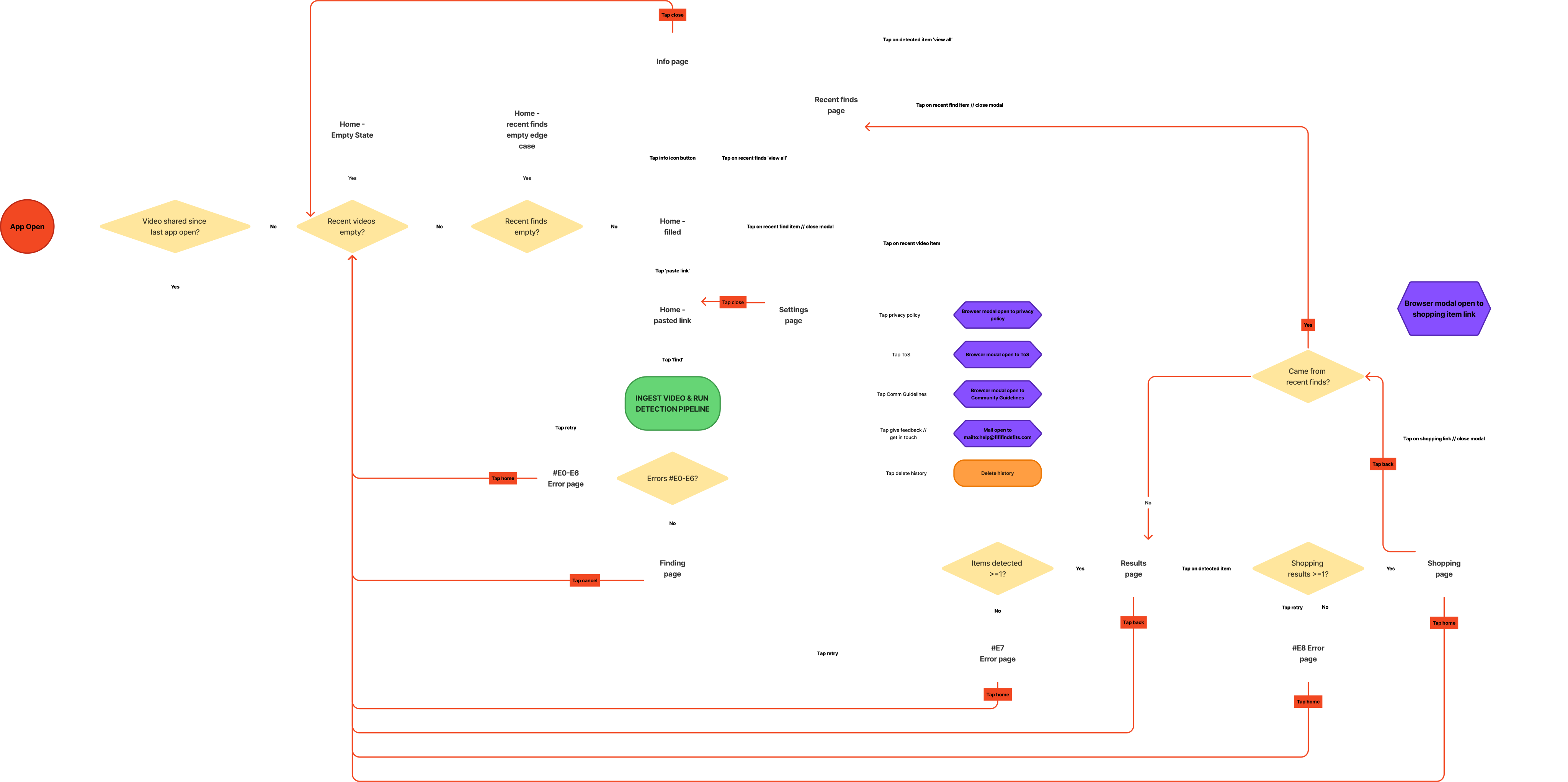
Flows

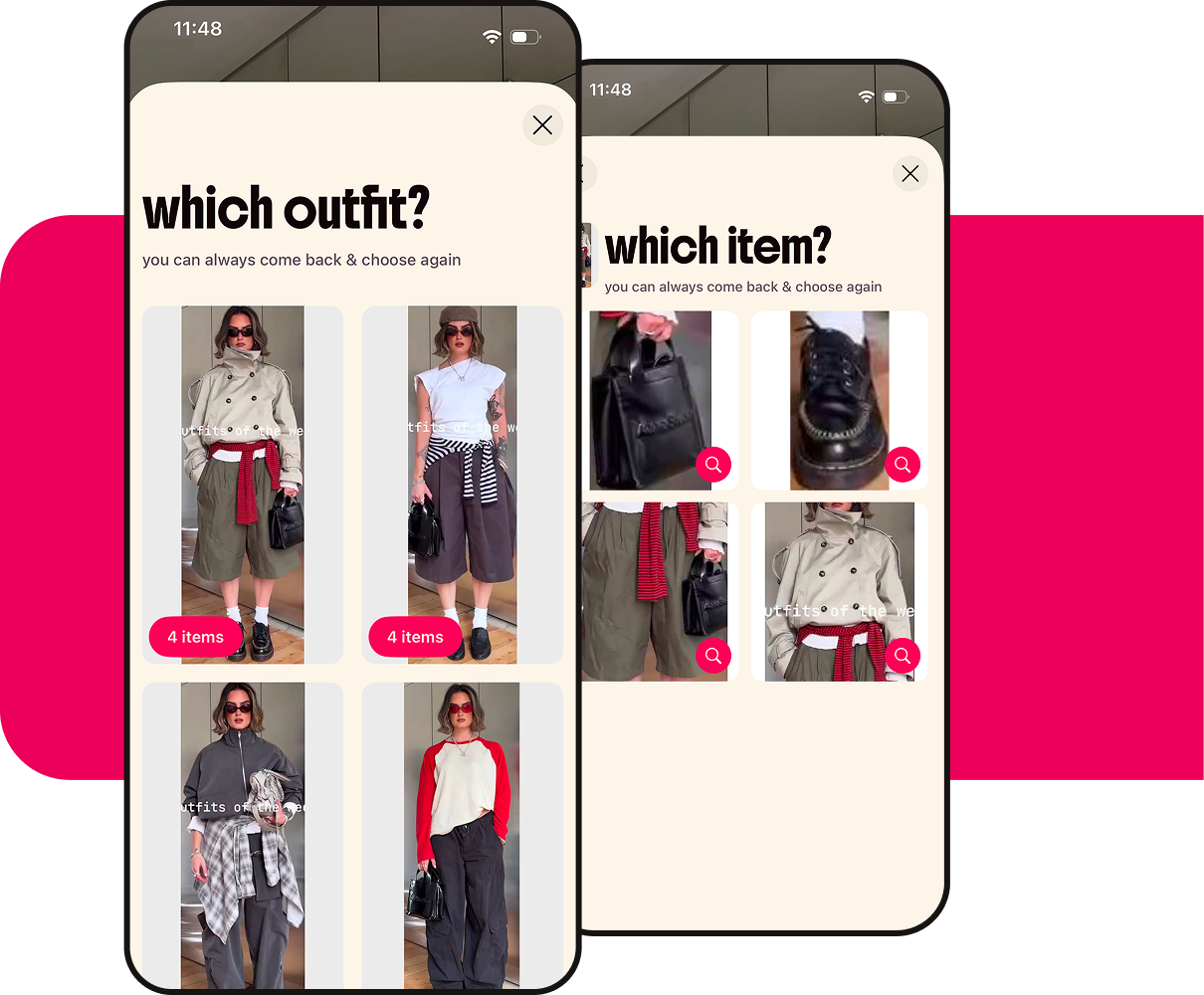
The primary flow of the FiFi app relies on a modal popup after the user shares from inside 3rd party app. This allows the user to find exactly what they’re looking for without even needing to navigate elsewhere. Anything the user shares can also be revisited inside the app

The in-app experience primarily supports viewing and resisting the user’s recent history of shared content and discovered clothing items. The user can jump straight back in to a particular item or even revisit all the detected items from a given video.

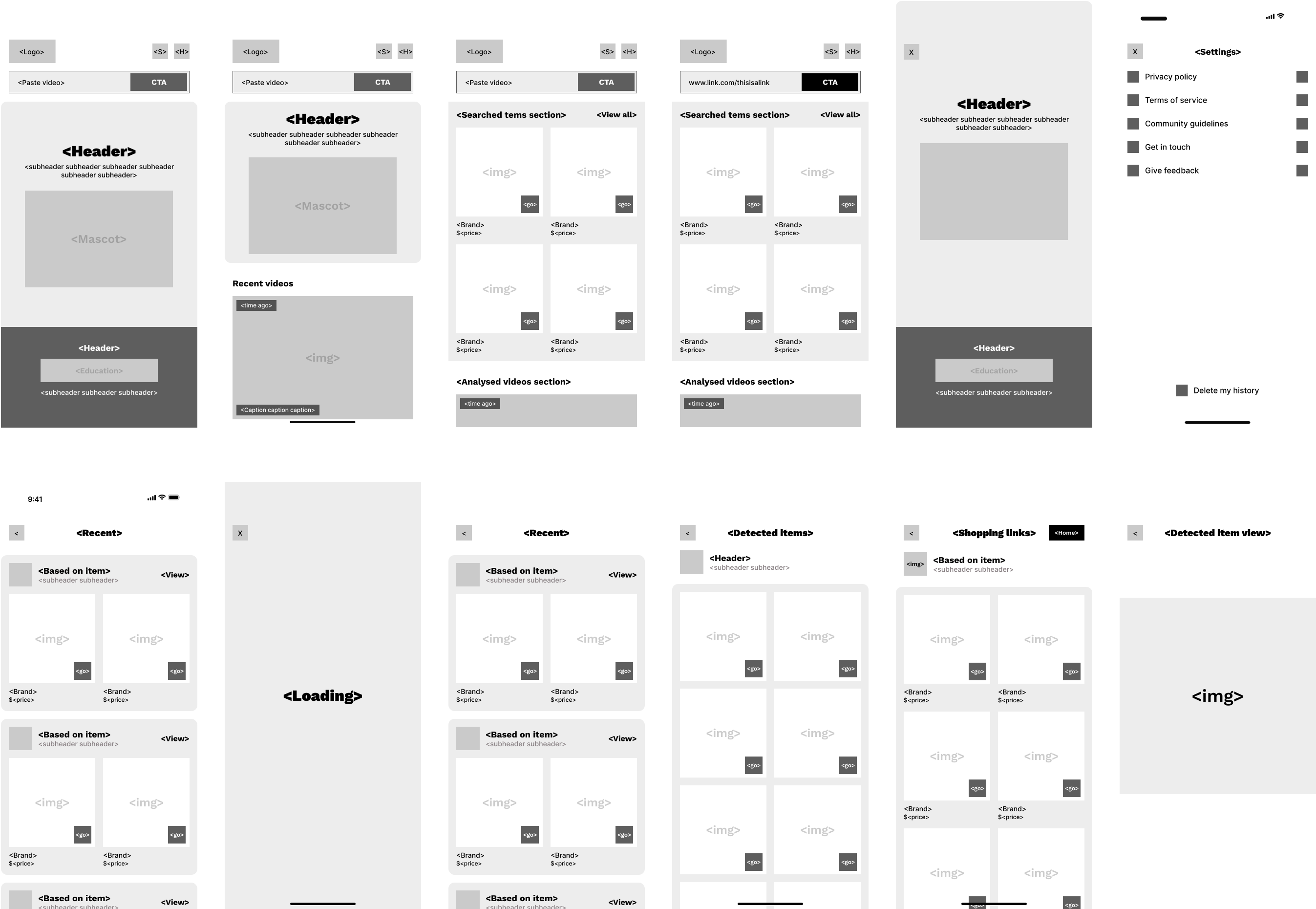
Wireframes

The UI emulates an e-commerce store, creating a coherent and familiar experience. However, given FiFi’s partial novelty, in-app education plays a significant role - helping the user learn how to use FiFi to it’s full potential.

Home

Revisit your searches and videos

Find

Choose which item you want to shop for

Shop

Compare stores, prices, and variations

Curious how FiFi's doing?

Watch this space or

get in touch

to join the beta